
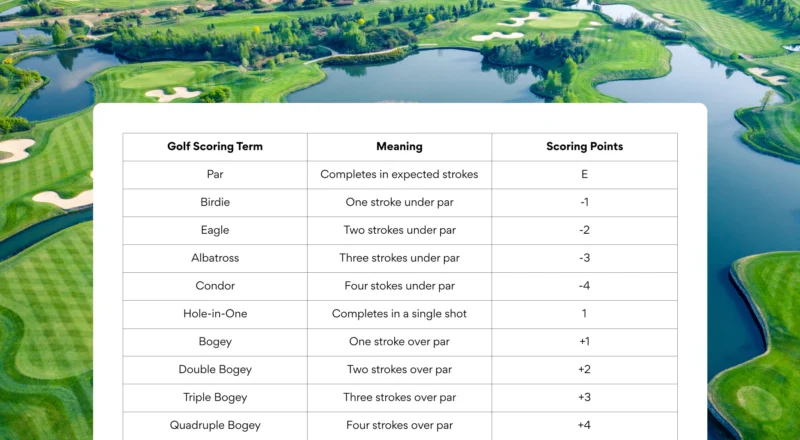
Golf scoring system represents a fundamental framework within the sport. Players navigate courses by completing holes in sequential order. Each hole establishes a designated par value. This value indicates the expected number of strokes required. Golfers record their actual stroke count per hole. The aggregate of all strokes determines the final score. Lower scores reflect superior performance in golf. Unlike many sports, this inverse scoring mechanism distinguishes golf fundamentally. Players compete against established course standards. They also measure performance against other competitors simultaneously. The scoring process demands precision and accurate record-keeping. Understanding score calculation proves essential for all participants. Course design influences difficulty through par assignments. Various factors affect individual hole challenges significantly. Elevation changes, hazards, and distance variations impact scoring difficulty. Professional and amateur players follow identical scoring principles. Handicap systems introduce additional complexity to competition structure. These systems enable fair competition among players of differing abilities. The golf scoring system evolves within established regulations. Governing bodies maintain consistency across tournaments globally. This standardization ensures comparable results across different venues. Scoring accuracy remains paramount throughout competitive play.
How Do You Score in Golf? An Explanation of Scoring Methods
Golf scoring systems vary significantly depending on the format of play, with each method designed to measure performance differently. Understanding how golf scoring works enables players to select the appropriate format for their skill level and competitive environment. The golf scoring system explained below covers the most widely used methods in both casual and competitive rounds.
Stroke play represents the most common golf scoring system based on total strokes, where players count every shot taken throughout the round. This golf scoring method for beginners offers straightforward calculation, as the player with the lowest total score wins. Match play operates differently, with competition occurring hole-by-hole rather than tracking cumulative strokes. Players win, lose, or halve individual holes, with the overall match determined by who wins more holes. Par scoring measures performance relative to the established par for each hole, recording results as over, under, or equal to par.
Several popular golf scoring formats exist beyond these fundamental methods:
- Four-ball competitions allow teams of two, with the better score on each hole counting toward the team total
- Scramble formats enable all team members to play from the best shot position after each stroke
- Best ball tournaments record only the lowest individual score per hole among team members
The table below illustrates key distinctions between primary golf scoring formats and their typical applications.
Comparison of Golf Scoring Methods
| Scoring Format | Calculation Method | Typical Usage | Winner Determination |
|---|---|---|---|
| Stroke Play | Total strokes counted | Professional tournaments, club competitions | Lowest total score |
| Match Play | Holes won vs. opponent | Head-to-head competitions, Ryder Cup | Most holes won |
| Par Scoring | Strokes relative to par | Casual rounds, tracking improvement | Lowest score relative to par |
Different types of golf scoring serve specific purposes within the sport’s structure. Stroke play dominates professional championships due to its objective measurement of skill across entire rounds. Match play generates compelling head-to-head drama, particularly in team events. Par-based formats help players understand their performance against course standards regardless of opponent scores. Belek Golf Courses offer a great setting to experience the various golf scoring systems in a competitive environment. These systems allow players to focus on personal improvement while also meeting the challenges presented by different golf courses.
How to Score Points and Keep Score in Golf
Accurate scorekeeping forms the foundation of every golf round, whether playing competitively or recreationally. Understanding how to keep score in golf requires familiarity with fundamental recording procedures and established conventions used across courses worldwide.
Recording strokes correctly ensures fair play and maintains the integrity of each round. Follow these essential steps when tracking scores:
- Record the total number of strokes taken on each hole immediately after completing it, including penalty strokes.
- Mark the score in the appropriate box on the scorecard corresponding to the hole number just finished.
- Verify the recorded score with playing partners before proceeding to the next hole to avoid discrepancies.
- Calculate the front nine total after completing the first nine holes, then repeat for the back nine.
- Add both nine-hole totals together at the round’s conclusion to determine the gross score for all eighteen holes.
- Sign and date the scorecard, then have the marker countersign to validate the scores recorded.
The golf scoring system relies on consistent application of these procedures throughout the round. Each player typically keeps a fellow competitor’s scorecard whilst simultaneously having their own card maintained by another player, creating a system of mutual accountability.
Maintaining accuracy when scoring points in golf requires attention to several practical considerations:
- Write legibly using pencil rather than pen to allow corrections if legitimate errors occur during play
- Double-check arithmetic when totalling scores to prevent calculation mistakes that could affect results
- Distinguish between gross scores and net scores clearly when recording both figures
- Note any penalty strokes separately before adding them to the hole total
Understanding how do you score points in golf extends beyond simple stroke counting. The golf point system operates on cumulative stroke totals, where lower numbers indicate better performance. Each stroke contributes directly to the final tally, making precise record-keeping essential for competitive equity and personal tracking.
Understanding Stableford Scoring: Points and System Explained
The Stableford golf scoring system represents a points-based format where players earn rewards based on their performance relative to par on each hole. This method transforms the traditional approach by awarding points rather than simply counting strokes. Players accumulate points throughout their round, with higher scores indicating better performance. The stableford scoring explained framework enables golfers of all abilities to remain competitive even after difficult holes.
The golf stableford points allocation follows a structured pattern that rewards performance levels. A stableford scoring chart demonstrates how each result compares to the designated par value for individual holes.
| Score Relative to Par | Points Awarded | Description |
|---|---|---|
| 2+ over par (double bogey or worse) | 0 points | No points scored |
| 1 over par (bogey) | 1 point | Standard outcome |
| Level par | 2 points | Solid performance |
| 1 under par (birdie) | 3 points | Above average result |
| 2 under par (eagle) | 4 points | Exceptional score |
| 3 under par (albatross) | 5 points | Rare achievement |
The golf score stableford calculation provides immediate feedback on performance quality. Players record their gross score on each hole, then convert this to the corresponding point value. The cumulative total determines the final result, with 36 points representing par performance across an 18-hole round.
This scoring methodology offers distinct advantages over conventional stroke play formats:
- Eliminates the discouragement of high scores by capping losses at zero points per hole
- Encourages aggressive play and risk-taking without severe penalties
- Maintains pace of play through maximum score limits
- Provides immediate understanding of competitive standing during rounds
- Allows players to recover from poor holes without compromising overall results
The stableford golf scoring system particularly benefits recreational competitions and club tournaments. Players can pick up their ball once reaching the maximum score threshold, accelerating round completion. This practical element reduces time pressure while maintaining competitive integrity. The format naturally adjusts to varying skill levels through net scoring applications, where adjusted scores determine point allocation. Course management strategies shift under this structure, as conservative approaches may yield fewer rewards than calculated aggressive tactics.
How Handicaps Work in Golf Scoring
A handicap represents a numerical measure of a golfer’s playing ability, calculated using the best scores from recent rounds. The World Handicap System, implemented across participating countries, standardises this calculation through a formula that considers the difficulty rating of courses played. A Handicap Index derives from the average of the best eight scores from the last twenty rounds, adjusted for course and slope ratings. This golf scoring system handicap enables players of varying abilities to compete equitably.
The application of handicap strokes transforms gross scores into comparable net scores through a structured process. Course handicap conversion occurs first, adjusting the Handicap Index according to the specific tee played and the course’s slope rating. The following elements determine how strokes are allocated during competition:
- Stroke allocation follows the stroke index printed on scorecards, with higher-handicap players receiving strokes on the most difficult holes first
- Net score calculation subtracts the player’s course handicap from their gross score, creating an adjusted total that reflects performance relative to ability
- Playing handicap adjustments apply percentage allowances in specific formats, ensuring balanced competition across different match configurations
Competition formats influence the percentage of course handicap applied, maintaining fairness across various playing conditions. Stroke play typically uses 95% of course handicap, while four-ball better-ball applies 85%. These adjustments account for the statistical advantage gained when combining scores with partners or opponents.
The golf scoring system handicap mechanism extends beyond individual stroke play into match play scenarios. Each player receives their full course handicap difference, with strokes distributed according to hole difficulty. Lower-handicap competitors concede strokes on designated holes, equalising competitive opportunities throughout the round.
Regular score posting maintains handicap accuracy, requiring submission of all acceptable rounds played under the Rules of Golf. The system recalculates Handicap Indexes after each posted score, ensuring current ability levels are reflected. Maximum handicap limits apply, with recreational golfers capped at 54.0 for both men and women. Exceptional score reductions trigger immediate adjustments when performance significantly exceeds established patterns, preserving system integrity and competitive balance across all participation levels.
PGA Golf Scoring System and Professional Tournament Formats
The PGA Tour employs a standardised scoring framework that governs professional competitions worldwide. The PGA golf scoring system operates primarily through stroke play, where competitors accumulate total strokes across multiple rounds. This methodology ensures objective measurement of performance and maintains competitive integrity throughout tournament progression.
Professional tournaments utilise several distinctive elements that differentiate elite-level competition from recreational play:
- Stroke play format serves as the predominant scoring method, requiring players to record every stroke taken across 72 holes, typically completed over four consecutive days
- Cut lines eliminate approximately half the field after 36 holes, with only the top performers and those within a designated stroke margin advancing to weekend rounds
- Playoff procedures activate when multiple competitors finish regulation play with identical totals, employing sudden-death or aggregate scoring over designated holes to determine champions
- Modified Stableford systems occasionally replace traditional stroke counting in select events, awarding points based on score relative to par rather than total strokes
- Weather-adjusted scoring permits officials to modify course conditions or suspend play, ensuring equitable competition when environmental factors significantly impact results
Tournament administrators maintain meticulous scorecards that document each player’s performance hole-by-hole. Electronic leaderboards update continuously, displaying real-time standings and stroke differentials relative to par. The gross score remains the primary metric, with no adjustments applied regardless of player ability levels.
Professional events distinguish themselves through stringent adherence to Rules of Golf as established by governing bodies. Penalty strokes apply uniformly across all competitors, with rules officials present to adjudicate disputes and interpret regulations. Scoring verification requires player signatures on official cards, with disqualification resulting from submission of incorrect totals.
The PGA golf scoring system maintains transparency and fairness through standardised protocols that have evolved over decades. This comprehensive framework ensures that professional tournament outcomes reflect genuine skill differentials, providing spectators and participants with confidence in competitive results across international tours and major championships.