
Turkey has emerged as a premier destination for golf enthusiasts seeking exceptional courses and favorable climate conditions throughout the year. For international golfers planning to visit the country, understanding the visa and permit requirements represents a critical first step in the travel planning process. The Turkish government maintains specific entry procedures that apply to golfers, whether they intend to participate in tournaments, attend training programs, or enjoy recreational play at established golf facilities. Golf visas and permits function as official documentation that streamline entry procedures and facilitate extended stays for sports-related activities. Different visa categories exist depending on the nature of golfing activities and the duration of the planned visit. Professional golfers, amateur competitors, and recreational players each encounter distinct regulatory pathways. The permit acquisition process involves coordination between relevant Turkish authorities, including sports and immigration departments. Prospective visitors must gather appropriate documentation and submit applications through designated channels. Understanding these procedural requirements ensures smooth travel arrangements and uninterrupted access to Turkey’s world-class golf facilities and experiences.
What Are the Easiest Ways to Obtain a Turkey Visa?
For many travelers, the most straightforward methods for securing a visa are the online e-Visa system and, for select nationalities, the visa-on-arrival option. The electronic visa is widely regarded as the most efficient route for obtaining a Turkey tourism visa for short-term visits.
- Online e-Visa Application: This is the primary and most convenient method for eligible travelers seeking entry for tourism or short-term commercial activities.
- Visa-on-Arrival: Citizens of specific countries may obtain their visa upon entering Türkiye at designated ports of entry.
The procedure for an electronic visa application is designed to be user-friendly and can be completed entirely online. Collective experience indicates that this process significantly streamlines travel preparations for many individuals.
- Access the Official Portal: The application must be initiated through the official Republic of Türkiye Ministry of Foreign Affairs e-Visa website.
- Verify Eligibility: Applicants must confirm their nationality’s eligibility and review any supplementary conditions, such as holding a valid visa from a Schengen country, the US, UK, or Ireland.
- Complete the Form: The online form requires accurate personal information, including passport details, travel dates, and a valid email address.
- Make the Payment: The visa fee is payable via a credit or debit card that supports the 3D Secure System.
- Receive the e-Visa: Following a successful transaction, the e-Visa is sent to the applicant’s email, typically within 72 hours. A printed or digital copy must be presented upon arrival.
For those wondering what is the easiest way to get a Turkey visa without prior online application, the visa-on-arrival system is a viable alternative for certain passport holders. This option is available at Turkish airports for short-term tourism purposes.
- Proceed to the Counter: Upon arrival, travelers should locate the designated Visa on Arrival desk.
- Present Documentation: A passport with at least six months of validity beyond the arrival date is required.
- Fulfill Additional Requirements: Proof of onward travel and sufficient funds for the stay may be requested.
- Pay the Required Fee: The visa fee must be paid at the counter, although these fees are generally higher than those for an e-Visa. The validity period for this type of visa is often up to 30 days.
Turkey Visa Requirements: What Documents and Conditions Do You Need?
To successfully apply for a visa for tourism or other short-stay purposes in Turkey, applicants must meticulously prepare a portfolio of essential documents and satisfy a number of specific conditions. The process requires careful attention to detail, as any omission or error can result in delays or rejection of the application. It is generally understood that a complete and accurately prepared submission significantly streamlines the evaluation process. The following list details the core components necessary for a standard application, covering everything from passport validity to proof of financial stability. Adherence to these guidelines is fundamental for all applicants.
- Valid Passport: The applicant’s passport is the primary identification document and must be valid for a minimum of six months beyond the intended date of entry into Turkey. Furthermore, the passport must contain at least two blank pages to accommodate the necessary visa and entry stamps. This is a non-negotiable prerequisite for all visa types.
- Biometric Photograph: A compliant Turkey visa photo is a critical element of the application. The photograph must meet stringent specifications to be accepted. It must be 50mm x 60mm in size with a plain white background, and it must have been taken within the last six months to reflect the applicant’s current appearance. The image should feature a full, forward-facing view of the applicant’s face, which should cover approximately 80% of the frame. A neutral facial expression is required, and the photograph must be clear, high-resolution, and free of shadows or borders. While eyeglasses are permissible if they do not cause glare or obscure the eyes, religious head coverings are allowed only if they do not hide any facial features.
- Completed Application Form: All individuals must submit a fully completed visa application form. This form must be filled out electronically to ensure legibility and then printed and signed by the applicant. All information, including personal data, passport details, and travel dates, must be accurate and provided in English. For applicants who are minors, the form must be signed by a parent or legal guardian.
- Proof of Accommodation: Applicants are required to provide verifiable evidence of their accommodation arrangements for the entire duration of their stay. This can be a hotel booking confirmation that clearly states the applicant’s full name, entry and exit dates, and the hotel’s contact details. Alternatively, if staying with a host, a formal invitation letter from the Turkish resident is necessary. This letter must be accompanied by a copy of the host’s identification and proof of address.
- Evidence of Financial Sufficiency: It is imperative to demonstrate sufficient financial means to cover all expenses during the visit. The established minimum is typically equivalent to €50 per day. Acceptable proof includes original bank statements from the last three to six months, proof of income like salary slips, or a formal sponsorship letter if another party is financing the trip.
- Travel Insurance: While highly recommended for all travelers, comprehensive travel insurance is mandatory for certain visa categories, including long-term, work, and student visas. The policy must provide coverage for the entire stay in Turkey and include provisions for medical emergencies, evacuation, and repatriation. This is a key part of the Turkey visa requirements.
Which Countries Qualify for Turkey Visa Exemption?
The Republic of Turkey grants visa-free entry to citizens of numerous countries for tourism and short-term visits. The specifics of the Turkey visa exemption, including the duration of stay and applicable conditions, vary based on the traveler’s nationality. These regulations are established through bilateral or multilateral agreements.
A significant number of nationalities are permitted to enter without a visa. The table below outlines the primary categories for visa-exempt ordinary passport holders, detailing the maximum allowed duration of stay within a 180-day period.
| Nationality Category | Maximum Duration of Stay (within 180 days) |
|---|---|
| Citizens of most EU countries, as well as Argentina, Brazil, Canada, Chile, Japan, New Zealand, Qatar, Russia, South Korea, Switzerland, UAE, UK, and the USA. | Up to 90 days |
| Citizens of specific countries including Azerbaijan, Belarus, Brunei, Costa Rica, Indonesia, Macao, Mongolia, Thailand, and Turkmenistan. | Up to 30 days per visit |
| Citizens of certain European countries such as Belgium, France, Germany, Greece, Italy, Liechtenstein, Luxembourg, Malta, Netherlands, Spain, and Switzerland. | Up to 90 days (Entry with National ID Card) |
It is crucial for all travelers utilizing the visa waiver program to understand the associated regulations to ensure a compliant visit. Adherence to these rules is mandatory and enforced by Turkish border officials.
General guidelines and specific conditions apply to all visa-free entries to ensure the system is not misused. These stipulations are essential for maintaining national security and immigration control.
- Purpose of Visit: The visa exemption is strictly for tourism or short-term business. Engaging in work or study requires a specific visa obtained in advance.
- Passport Validity: Travelers must possess a passport valid for at least 60 days beyond the duration of their visa-free stay.
- Duration Limit: The cumulative stay cannot exceed 90 days within any 180-day period. Overstaying can result in fines, deportation, or future entry bans.
- Official Discretion: Final entry permission is granted at the discretion of Turkish border control officers.
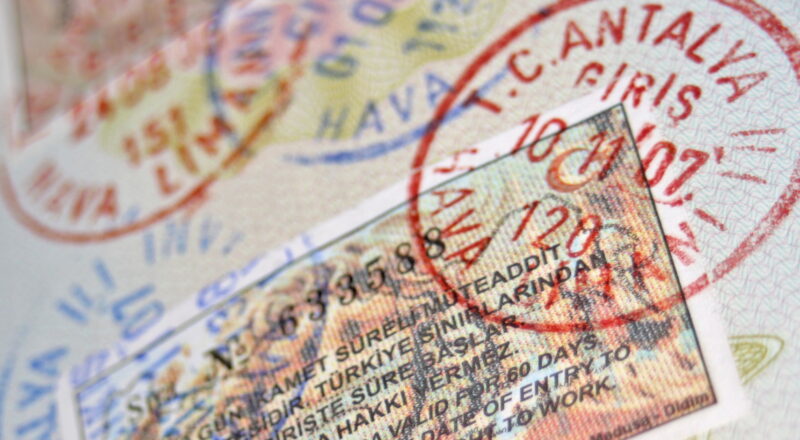
- Entry and Exit Stamps: Passports must be stamped upon entry and exit to provide official proof of the stay’s duration and prevent potential legal issues.
- Extended Stays: For visits longer than the visa-free period, an application for a “Short Term Residence Permit” is required at the Provincial Directorate of Migration Administration.
How to Obtain Golf-Related Visas or Permits for Turkey
Obtaining the necessary travel authorization for a golf-focused trip to Turkey involves different procedures depending on the duration of the stay. For short-term visits, standard tourist visa protocols are generally sufficient, while longer stays necessitate residence permits or investment-based immigration pathways. Our experience indicates that understanding these distinctions is crucial for a seamless travel and immigration process.
Golf Tourism Visa Application Procedures
For short-term golf holidays, the primary route is through a tourist visa. The application process for this travel authorization generally follows established protocols, which can be initiated either online or through diplomatic missions.
- Identify the appropriate visa type for your nationality. Many travelers are eligible for an e-Visa, which can be secured through the official online system for tourism or commercial purposes.
- If an e-Visa is not an option, apply for a sticker visa at a Turkish diplomatic representation. This requires submitting a completed application form and other supporting documents.
- Ensure your passport is valid for at least 120 days from your entry date. For some nationalities, this requirement extends to six months.
- Prepare necessary documentation, which typically includes passport-sized photos, flight and accommodation reservations, and proof of travel medical insurance.
These procedural steps are foundational for anyone planning a short golf trip. For individuals considering a more extended stay to fully experience Turkey’s golf offerings, different legal permits are required to prolong their visit beyond standard tourist visa limits.
Special Permits for Extended Golf Stays
When a golf trip exceeds the standard 90-day limit within a 180-day period, a residence permit becomes mandatory. Securing this permit is essential for legal long-term stays.
- A short-term tourist residence permit can be issued for a maximum duration of two years.
- The application must be initiated before the expiration of the initial tourist visa.
- Applicants must provide proof of accommodation, such as a paid hotel reservation for the extended period.
- Demonstrating financial sufficiency through bank statements or confirmed income is a key requirement.
- Comprehensive travel health insurance valid for the duration of the stay is also mandatory.
Investment-Based Visa Opportunities Near Golf Facilities
For high-net-worth individuals, Turkey offers investment programs that provide a direct path to residency or citizenship. These options are particularly attractive for those looking to invest in real estate near premier golf destinations like Belek.
- The Turkey Citizenship by Investment (CBI) program is accessible by purchasing real estate valued at a minimum of $400,000.
- This investment grants the right to live, work, and study in Turkey, along with a passport providing visa-free access to over 110 countries.
- Another option is a residency permit by investment, obtainable through a property purchase of at least $200,000.
- This “Golden Visa” grants residency and can lead to citizenship after five years of continuous permanent residency in the country.