
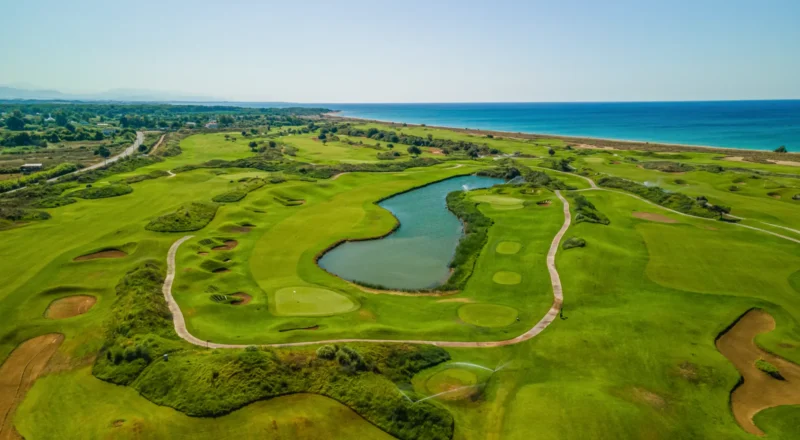
Links golf represents a distinct playing style originating from the coastal regions of Scotland and Ireland. This particular format emerged from the natural terrain characteristics of seaside landscapes. The term “links” derives from the Scottish word describing undulating, treeless ground near coastlines. These courses feature specific environmental elements including firm fairways, deep rough grasses, and minimal water hazards. Wind plays a significant role in links golf conditions, directly affecting ball trajectory and gameplay strategy. The design philosophy emphasizes natural contours rather than artificial modifications. Players encounter challenging conditions that demand precise shot-making and strategic course management. Links courses present different obstacles compared to traditional parkland layouts. Sand bunkers, often positioned strategically throughout the course, require careful navigation. The playing experience reflects the historical origins of golf as it developed in Scottish communities. Understanding links golf provides insight into classical golf architecture and its enduring influence on course design worldwide. This format continues to challenge professional and amateur golfers alike through its distinctive characteristics and demanding conditions.
Where Does the Term ‘Links’ Come From?
The term links golf originates from the Old English word “hlinc,” which refers to rising ground or ridge. This linguistic root evolved through Scottish dialect to describe the specific type of coastal terrain where golf first flourished. The sandy, undulating land connecting inland areas to the sea became known as “links land,” characterised by its unique topography and natural drainage properties. These coastal strips proved ideal for early golf development due to their firm, fast-running turf and minimal vegetation.
Scottish golfers adopted the terminology to distinguish these seaside courses from inland layouts. The question of why they call it links relates directly to the geographical characteristics of these coastal zones. Links land typically consists of sand-based soil deposited over thousands of years by receding seas and shaped by persistent coastal winds. This natural formation created the perfect foundation for golf without requiring extensive artificial construction or irrigation systems.
The connection between terminology and landscape remains fundamental to understanding authentic links golf. What does link mean in golf extends beyond simple etymology to encompass the entire playing experience shaped by these coastal environments. The sandy subsoil provides exceptional drainage, allowing play even after heavy rainfall, whilst the wind-sculpted terrain creates natural hazards and strategic challenges. These environmental factors influenced course routing and hole design from golf’s earliest days.
Modern usage of why is it called links golf reflects both historical accuracy and marketing appeal. The term now carries significant cultural weight within the golfing community, representing a specific style of course architecture and playing conditions. Links courses feature firm fairways, deep pot bunkers, and minimal tree coverage, all direct results of their coastal origins. The terminology preserves the connection between contemporary golf and its Scottish heritage, maintaining recognition of the natural landscapes where the game evolved into its present form. Many modern courses, including Belek golf courses Antalya, strive to emulate these traditional characteristics, offering players an authentic links experience. This connection to the past ensures that the essence of the game is preserved, allowing golfers to appreciate the sport’s historical roots.
What Are the Defining Features of a True Links Golf Course?
A true links golf course possesses distinct physical and environmental characteristics that differentiate it from standard inland layouts. Understanding what is a links golf course requires examining its natural setting and playing conditions. The definition of links golf course centers on coastal locations where land connects the sea to fertile agricultural ground. These courses occupy sandy, windswept terrain shaped by centuries of natural erosion and maritime influence.
Key Defining Characteristics:
- Coastal Location: True links courses sit on linksland, the narrow strip of sandy soil between ocean and arable farmland, typically positioned along exposed shorelines.
- Natural Terrain: The landscape features rolling dunes, undulating fairways, and deep pot bunkers formed by wind and grazing animals rather than artificial construction.
- Sandy Soil Composition: Free-draining sand-based soil ensures rapid water runoff, allowing play even after heavy rainfall and eliminating the need for extensive irrigation systems.
- Sparse Vegetation: Native fescue grasses, gorse, marram grass, and heather dominate the landscape, requiring minimal maintenance compared to lush parkland courses.
- Wind Exposure: Constant prevailing winds from the sea significantly influence shot selection, club choice, and overall playing strategy throughout every round.
- Firm Playing Surfaces: Hard, fast-running fairways and greens demand ground game strategies, with the bump-and-run approach often proving more effective than aerial shots.
What makes a true links golf course distinct becomes clearer when comparing links course vs regular course characteristics across multiple dimensions. The difference between links golf and regular golf extends beyond aesthetics to fundamental playing conditions.
Links vs Regular Course Comparison:
| Criteria | Links Course | Regular Parkland/Inland Course |
|---|---|---|
| Terrain | Natural dunes, rolling ground | Manufactured contours, tree-lined fairways |
| Soil Type | Sandy, free-draining base | Clay or loam requiring drainage systems |
| Vegetation | Fescue, gorse, marram grass | Ryegrass, ornamental landscaping, mature trees |
| Maintenance | Minimal irrigation, natural growth | Intensive watering, fertilization, grooming |
| Playing Conditions | Firm, fast, wind-affected | Soft, receptive, predictable |
| Bunker Style | Deep revetted pot bunkers | Shallow, manicured sand traps |
What defines a links golf course ultimately relates to authenticity and adherence to traditional Scottish and Irish coastal designs. Links style golf course layouts prioritize strategic positioning over length, rewarding creative shotmaking and course management. What does links golf mean in competitive terms involves adapting to unpredictable weather patterns and firm conditions where controlling ball roll becomes paramount. Links golf course meaning extends beyond physical attributes to encompass a distinctive playing philosophy rooted in the sport’s historical origins.
How Many Links Golf Courses Exist Worldwide?
Authentic links golf courses represent a remarkably rare phenomenon in the global golfing landscape. Fewer than 250 true links courses exist worldwide, accounting for less than one percent of all golf facilities internationally. This scarcity stems from the specific coastal terrain and environmental conditions required for genuine links golf, making these venues highly prized among golf enthusiasts and professionals alike.
The overwhelming majority of links courses concentrate in specific geographic regions where natural conditions align perfectly with traditional links characteristics:
- Scotland hosts approximately 60 percent of the world’s genuine links courses, with iconic venues along the east and west coasts establishing the benchmark for what are links golf courses
- Ireland contains the second-largest concentration, particularly along its Atlantic coastline where dramatic dune systems create spectacular championship-standard layouts
- England features notable examples primarily in Lancashire, Kent, and East Anglia, where sandy coastal soil supports authentic links terrain
- Wales offers a smaller but significant collection, predominantly along its western shoreline facing the Irish Sea
- Australia, New Zealand, and North America collectively contain fewer than 30 true links courses, with most located in coastal regions where geological conditions permit proper links development
Understanding how many links golf courses in the world exist emphasizes their exceptional nature within golf architecture. These courses remain geographically concentrated because specific topographical requirements—sandy soil, natural drainage, coastal winds, and minimal tree coverage—occur only in limited locations. The preservation of existing links venues and careful development of new sites continues to shape the future of this distinctive golfing tradition.